About

PT Watercraft designs dinghies that are efficient, functional, modern, and attractive—available as kits you can build yourself. We also carry small boat parts and instructional books.

Quick Links

Connect

Explore

By Category

By Date

Category: All Clear

Sandy Goodall; Sail designer

Re: Sail Making and Sail Design.

As introduction, Sandy Goodall designed the PT 11 sail. Working with Sean Rankins of NW Sails and Canvas, and Russell, they prototyped and modified the sail to its current size and shape. Sandy is a friend and great to work with but I realized that I knew very little about his career as a sail designer. So I asked. (I have to say, that Sandy is pretty humble.)

ptwatercraft.com
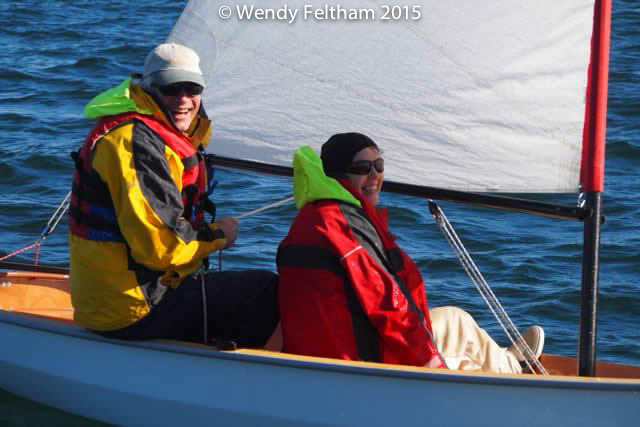
Sandy in the PT 11

Ashlyn: How did you get into sailing and sail making?
Sandy: I was very interested in sailing from a fairly early age (my mother was an avid sailor from the Canadian maritimes), and I knew that I wanted to get a job working with sailboats.
So it was either yacht design, boat building or sail making. I ended up choosing sail making, thinking that it involved the least math. (wrong!)

Ashlyn: When, where and how did you learn sail making, and how long have you been doing it?

Sandy: My family was living in Toronto in the late sixties, and the famous Danish sailmaker Hans Fogh (who trained under Paul Elvstrom) had emigrated to Canada, and lived in Toronto.
His loft was not far from my parents’ house, and I visited him and nagged him until he agreed to take me on as his apprentice, after I completed university in 1974. So, it has been 40 years now!

Ashlyn: What types of boats do you deal with?

Sandy: Almost all kinds. My first real responsibility as a young sailmaker was cutting the Laser sails for the newly introduced Laser class dinghy.
But since then, I have sailed, and made sails for everything from Optimist dinghies to square riggers, high tech mono and multi hull racers, and Arab Dhows.
So all kinds of boats, really, and I appreciate all of them for different reasons.

Ashlyn: What type of design tools do you use?

Sandy: When I started sail  making back in 1974, it was all still pretty traditional. The master sailmaker kept all his design notes and secrets in a “little black book”, and we apprentices were not necessarily privy to all the tricks of the trade. But we were in search of ways to increase the repeatability of a good design, so we gradually started to reverse engineer the traditional methods, at first using very simple programs written for HP programmable calculators.
Surprisingly, as a non–math person (I studied philosophy at university), I was very interested in this process, which ended up directing my career in sailmaking.
I continued along this path, becoming involved in the ongoing development of sail design software. I ended up selling my share of the Elvstrom Sails loft in Denmark, and focused on sail design software (“SmSw6” and “Azure Project”), and sail design, working free-lance, designing sails for other sailmakers. These days, sail design software is quite sophisticated, and we can do both structural and aerodynamic analysis on proposed sail designs, all on a lap top computer.

Ashlyn: Do you manufacture sails?

Sandy: Not any more. I was directly involved with manufacturing sails (Elvstrom Sails Denmark) until 1990, but I have specialized in computer sail design since then.
The digital recipe that is the result of the sail design process is then sent by E mail, and cut on some computer driven machine, to be assembled “somewhere in the world”.
I collaborate with quite a number of sailmakers, where I do the design work, and they build the sails. I also coach other sailmakers in the use of the sail design software.

Ashlyn: “Do you think custom sail makers (in the USA for example) still have an impact in a world of factory made sails?”

Sandy: “Yes! It’s hard to dispute the fact that the big offshore sail manufacturers offer very attractive prices, due to the economies of scale.
But there will always be an important place for local lofts, producing excellent sails and providing on-the-spot personal service to their clients. I’m happy to be in a position where I can collaborate with these local lofts (like Northwest Sails and Port Townsend Sails). The personal contact, the creative discussions, the boat measuring, prototyping etc. that this close collaboration allows, certainly represents added value for the end user.”

Ashlyn: Do you have any favorite boat types, or types of design work?

Sandy: I like all kinds of sail boats, large and small, fast and slow, modern and traditional. But I suppose that I prefer smaller boats, and the projects that involve working with people I know and like.

Ashlyn: Can you predict anything concerning the future of sails and sail making?

Sandy: New high tech materials are constantly being developed at an increasing rate, and we can build sails that are lighter, and less stretchy, than ever before. But these (racing) sails are not necessarily a pleasure to use, for the leisure sailor. So there is still a place for traditional dacron and nylon sails, and there are still many people who appreciate and prefer them.
I think we will see more kites and “thick sails”, and lots more work on hydro foils, and various other drag reducing inventions! The “foiling moth” class is a good example of one of the many interesting directions things are going!

Ashlyn: How can people best contact you?

Sandy: Via E mail, at sgoodall@telus.net

Ashlyn: What information should people have on hand to begin a new “design” conversation?

Sandy: To begin with, just the size and type of boat they have, and where they sail, and whether it’s racing or cruising. Then we can take it further from there.

Ashlyn: Thank you Sandy! Russell and I feel very fortunate to work with you.
Sandy: You’re welcome! I really enjoy working with you and Russell!

Learn more on Sandy’s website; http://www.sandygoodall.com/

Read Sandy Goodall’s Review of Sailing the PT 11 nesting dinghy.
ptwatercraft.com


Shipwright Regatta 2015

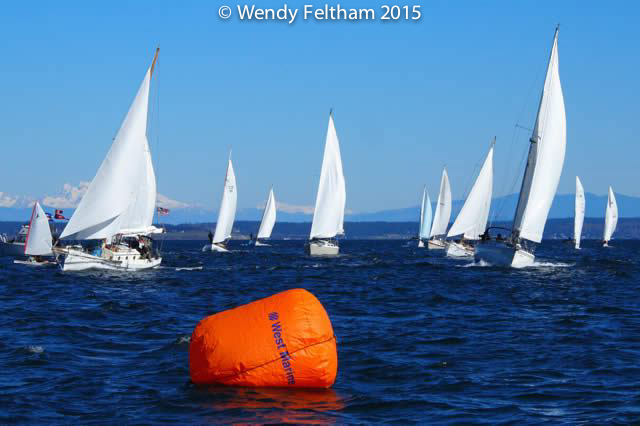
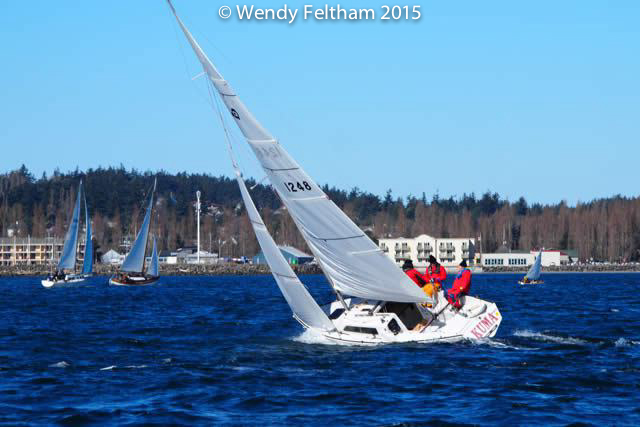
February 28 2015 was a beautiful sunny and breezy Saturday, and it was the occasion of the annual Shipwrights Regatta in Port Townsend. Russell and I are not racers but this seemed like a good excuse to get out on the water. We entered the PT 11 thinking there would be a host of dinghies in the fleet as is often the case in Port Townsend. Well, we turned out to be the only actual dinghy! Our 11 footer was the most “water-line challenged” in the fleet. Next up in size were 505 Olympic class racing dinghies, then 6 Thunderbirds, and lots of racing and cruising yachts of a wide variety.

PTWATERCRAFT.COM
LIL B ON THE STARTING LINE, FAR LEFT (click to see larger)

When the horn sounded for the start, we were first across the ‘line’, together with the ‘cruising class’.  We made the course around the bay twice and crossed the finish line just over 2 minutes behind the last large boat.  Yes, we finished last which, after-all, was pretty much a given at the start!  It was a lot of fun and nobody was ever left far behind as even we were able to stay close to the fleet and boats with 10 times our sail area and 3 or more times our waterline.

ptwatercraft.com
LIL B FAR RIGHT (click to see larger)

A great thing about this town and this sailing community and regattas like this one is the fun loving spirit and a trophy of some kind for almost everyone.  We won the Boat Hook, as the boat that ‘could have used a little pull’… or one less crew, perhaps.. but we were tickled with our “win” and had a blast out on the water. I was having so much fun, cold as I was, that a childish grin was frozen on my face.

Lil B at the finish line

My fingers were too cold and stiff to work the Gopro camera very well but what I got is HERE, wet lens and all.
Other pictures of the day can be seen on the Port Townsend Sailing Association website.  We are seen under the results and Annual Awards as “Lil B”.

😉 Ashlyn

A new book in the family

In another lifetime, I lived on a large sailboat. I wrote a little book for children highlighting moments of living aboard with small children for small children.

You can see it on Amazon Here: Thank you! 😉 Ashlyn

Boat designer/builder talks about building a gypsy wagon

Totibleu.wordpress.com

Building a ‘roulotte’ in France

I am including this post because I think it is interesting and…

Totibleu.wordpress.com
Suzanne Snadecki paints her dream into reality..

it involves my family doing something pretty amazing. My mother, who lives in France, woke up one morning and decided she wanted to travel around the country in a horse drawn gypsy wagon. A long time sailor herself, this will be her ‘boat ashore’. Not one to do anything half way in spite of a shoe string budget, she has made major progress toward realizing her dream from scratch in little over a year.

BSD-Batwing (™) sail creator and founder of Balogh Sail Design, MARK BALOGH,

ptwatercraft.com
The doorway arch in progress.

is a big part of the project. Here he writes about building a roulotte (“gypsy wagon”) using multihull design as a reference point. There are other posts with pictures of the construction and material choices or Click here to start from the beginning! on Totibleu.wordpress.com.

Suzanne has been raising the money for the project in small doses, with her paintings and donations from inspired friends. Her blog is rich with humanity, color, and the unfolding story of the project happening in the scenic country side of France. The project has also become a statement about slowing down in a world that seems to have forgotten how to look up and see the beauty around us.

PTW – AB 😉

Experimenting with an old idea

Those who are familiar with The Gougeon Brothers on Boat Construction (link leads to a free digital version of the book) may have read the chapter on a type of boat building called; “compounded plywood construction” also known as “tortured” plywood. It is the method used to create the famed Tornado catamaran hulls. Russell has recently been exploring this method. Click HERE to see a  6 page pdf as just a taste of what he has learned so far.

Speaking of the Gougeon Brothers, the current issue of Woodenboat Magazine has a feature article about Meade Gougeon.


Tornado plana

Race to Alaska update-Winter 2015

ptwatercraft.com

The buzz continues… in fact, the buzz, bang, humm, crank, tweak….of shop machines and brain gears, can be heard behind closed doors!

Bieker designed proa in progress.

Boats are being built! Locally, team Turnpoint Design is working on a catamaran. A Bieker designed proa is in the works, and Edensaw Woods is sponsoring a team, also building a catamaran. Sail, peddle drives, rowing stations, and combinations there-of are being carefully considered and applied to these boats.  What is most exciting about this race is that, given the prevailing conditions on the course, designers and athletes are challenged to make the most of their ‘sail/human powered’ boats. A creative force has been awakened and the fact that there are so few rules and filters on what types of boats can enter, we are likely to see all from kayaks to large racing yachts.

Current specs on registered participants HERE.

Small Craft Advisor Magazine, has an interesting feature discussion in the current issue. They asked the opinions of a number of respected characters about specific pros and cons regarding the Race to Alaska. As a sponsor, they also host a forum for the Race to Alaska,  among several others on several websites.

ptwatercraft.com
rowing in Desolation Sound
ptwatercraft.com
“Patos” in Desolation Sound. photo by owner

‘it’s not just a boat..’

PTWATERCRAFT.COM

we received a very special New Years gift from PT 11 builder Cassie McDermott. It was a really nice email and a pdf attachment from 10 year Milo, for whom she built the boat. She concluded her letter thus:

“I knew that your boat changed our lives, but I didn’t realize just how much. I am overwhelmed and feeling completely blessed for what you and your boat has brought our family. In the end, it’s not just a boat.”

..”Please feel free to share Milo’s story. Maybe it will inspire other young folks to get into boatbuilding and sailing. ” Click here to read Milo’s story about his PT 11 … and something more..

PTWATERCRAFT.COM
Milo in his PT 11 that he and Cassandra built. See more on this project HERE

Photo Contest 2015

ptwatercraft.com

I thought it would be fun to have a photo contest this year.

It could result in a really nice calendar.Winners could choose from puzzles, mugs, T-shirts,(printed with their winning photo), or other prize options yet to be decided.ptwatercraft.comThe PT Skiff at the festival, by Ashlyn Brown

Overview:

Categories: Scenic, Action, & Project

Photo Quality: Maximum! (300dpi or more) JPEG format

Orientation: Landscape(horizontal) is best but if you have a Portrait oriented photo that you just love, send it in!

Photo-shopping:You can enhance photos but please no montage.

Judging & Submissions: Please have your pictures in by August 1st, 2015. Late entries might still be considered. Russell and I will be judges this year. Submit photos to ptwatercraft @ gmail.com. (no spaces)

ptwatercraft.com
planing PT 11 by Ashlyn Brown

Parameters detailed below along with details on all of the above.

Details info as of 1-4-2015

Scenic: Where are the beautiful places and moments you are using your PT11, Spear or PT Skiff? Part or all of the boat should be a part of the picture in some way but the scenery can be the primary subject.

Action: Like it sounds; sailing, rowing or motoring in lively conditions and locations.

Project; Can be humorous moments during your project, celebrations, launchings, artful personalized details incorporated into your boat, etc.

Photo quality: Maximum! Preferably 300 dpi or more, large(max) file size, JPEG

ptwatercraft.com
the quiet before fireworks on the 4th of July, by Ashlyn Brown

Orientation: Landscape.  I can crop for vertical if we have the opportunity to use it but in most cases, especially for calendars, Horizontal landscape orientation works best. My intention is to create really nice quality calendars.

Photoshopping: If you have a good photo program and like to play with your pictures, why not, but within reason please. We are seeking natural beauty in settings and human moments of experience. Montage of photos is not acceptable.

Judging: This year Russell and I will be the main ” judges.” As this idea evolves, details may change somewhat. We both love photography and we both have a different perspective about what makes a really good photo. I can also do photo refining if you send a raw photo that you believe has merit but you do not have a way to straighten horizons or other needed corrections.

Parameters: We are looking for pictures that everyone can enjoy, whether they own one of our designs or not. Most people can agree what kind of pictures are creative and inspiring. After all, it will hang on your wall for a month at a time.  I believe that anyone who chooses to spend their time in nature, appreciates its beauty and those who like to play in boats appreciate the excitement. I also like the idea of a portion of calendar sales as a fundraiser for a good cause. Good participation will make this a success, and then we will indeed choose a cause carefully.

Example: The following photo is just an idea of how a dramatic moment in nature can include one of our boats. In this case, the PT Skiff in the shadows.Ashlyn E Brown

SUBMISSIONS should be sent to PTWATERCRAFT @ gmail.com. (no spaces)

New book about scarfing wood

Scarfing Basics is the latest ‘how-to’ book by Russell, since publishing Epoxy Basics in ptwatercraft.com2013. These books do not come into being casually. Every photo requires a good subject and what presented itself in the shop in between ‘business as usual’ this summer was scarfing. There are often ‘how to scarf’ questions online and a wide range of opinions shared that can sometimes cause more confusion than real help.  The builder is still left to pick and choose how to proceed. For Russell, “strong, clean, and accurate” are the words of the day. This book describes the methods he prefers, in direct, concise language and large color photographs. While there are multiple ways to scarf plywood and lumber, this book is a great place to start and/or perfect your scarfing skills. Amateur and professional woodworkers alike will find a lot of good information and tips in this book for Cutting and Gluing, Strong, Straight, and Clean Scarf Joints in Plywood and Lumber, including making your own jigs for table saw and router.

The book is currently in its final proofing stage and will be available as an ebook first, and as a print book in late January from Port Townsend Watercraft.

If you don’t want to wait for your book, you can pre order the print book now and get a digital pdf free. Click here to learn more and place your order.

Thank you!

A PT Skiff taken to the ‘next level’

 Launched!

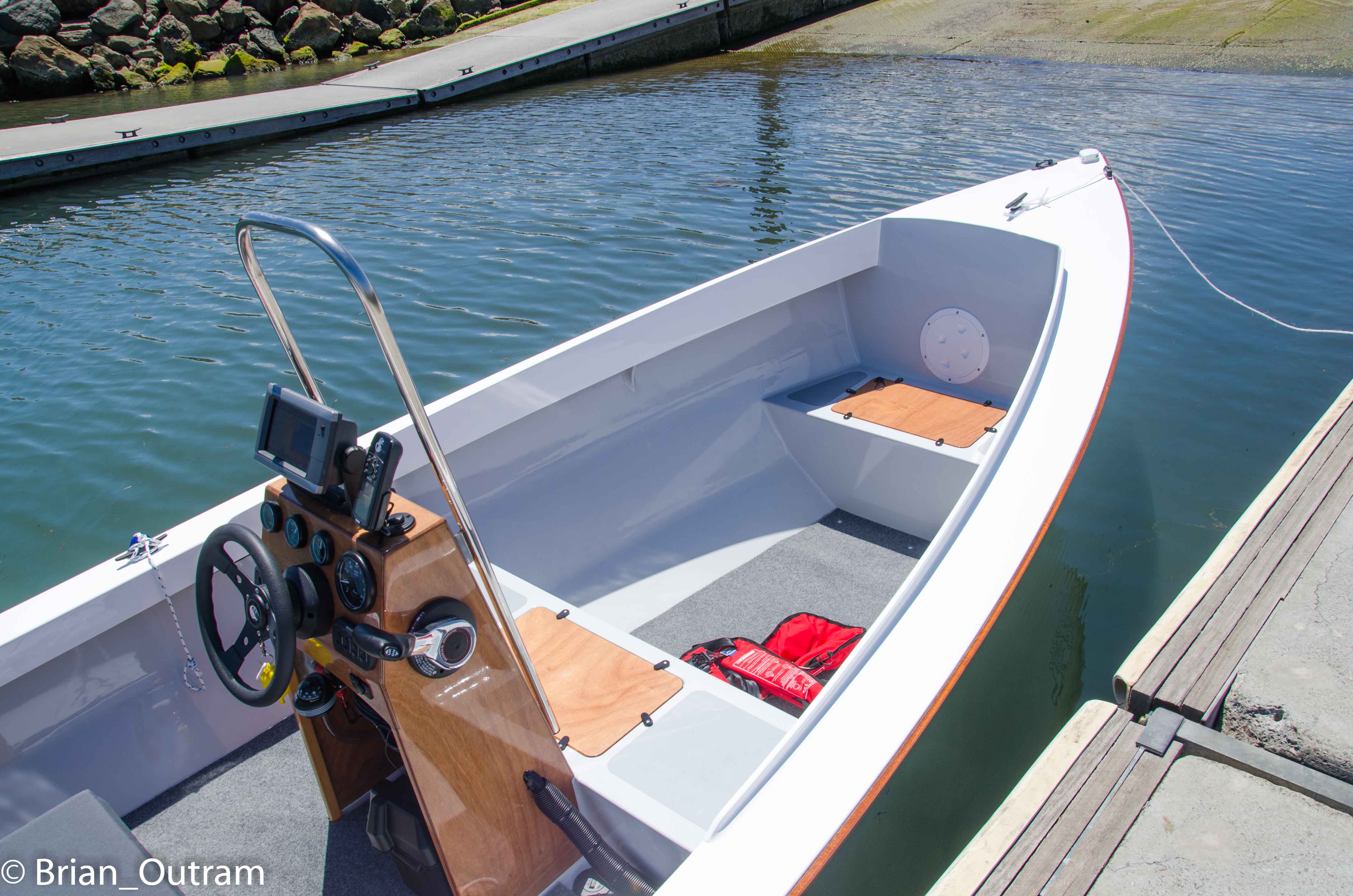
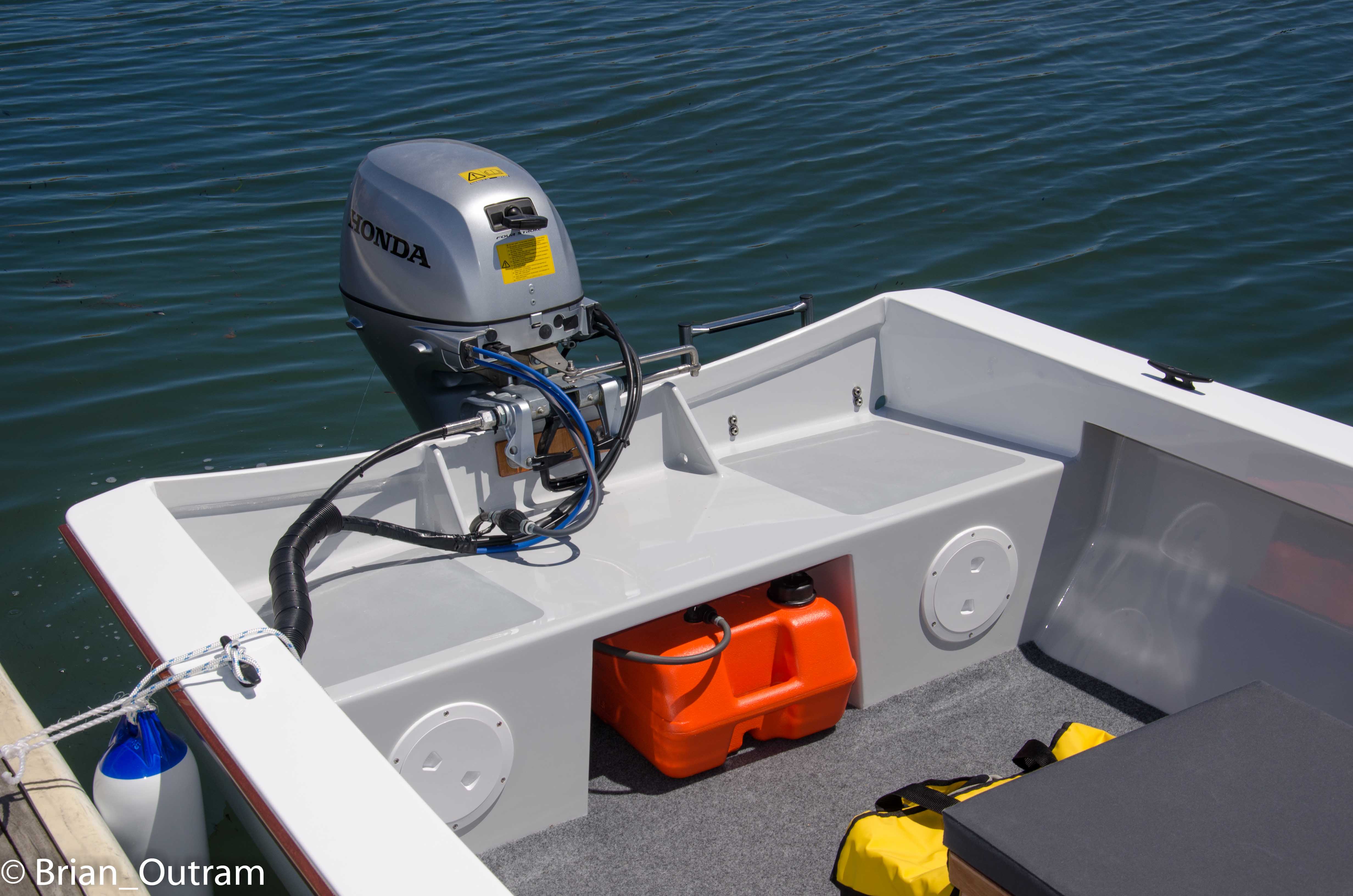
Brian in Australia has completed his PT Skiff and I think there is much to consider about what he has done with his boat. After developing sensitivity to epoxy, he had to hire help to finish the boat and we tip our hat to his perseverance. Clearly Brian is a stickler for detail and he has maintained a clear vision for his skiff. He sent a detailed account of his choices for outfitting the boat and it is this account that I want to share.  I have put it together as  a PDF document (HERE) that you should be able to download or read online. It is filled with photos to compliment his notes.  If you are currently building a PT SKIFF, these notes will be informative. If you are thinking about building one, this should wet your appetite!  His boat is very impressive!

In addition, the following photos arrived with this ‘Launch report”

My PT Skiff launch went extremely well today. Everything worked.
 
The photographs attached were taken during the initial 15 minute warm-up of the motor at the boat ramp at Adelaide Sailing Club. Whilst it looks very calm at the ramp (large breakwater), we ventured out into wind waves up to 1 metre in St Vincent’s Gulf. The wave fetch here is approximately 38 nautical miles from the other side of the gulf with the wind in a WSW direction. I have checked our weather website tonight and the wind was 11 knots gusting to 14 while we were doing stage 2 of the motor run-in (2000 to 3000 rpm).
 
The boat was lively. Whilst it is quite tender at the dock, once you understand that you can deal with it.
 
We went upwind for about 20 minutes. The boat was reminiscent of a lively sailboat. The boat was bouncing around a little into the wind waves, though it was dry. The boat was very pleasantly quiet even in the one metre waves. After flooding the water ballast tank, the boat was a little more stable, but did not show any significant loss of speed into the breeze.
 
Running downwind (again limited to 3000 rpm) the boat started surfing the waves. It was fun.
 
The first 1 hour of run-in is now complete and I can now use the boat at weekends without causing queuing problems at the ramp.

PTSKIFF_7E210 PTSKIFF_7E210c PT_SKIFF_7E210b PT SKIFF_7E210a